Tag

Patricia Holman

The Foot Bone’s Connected to the Jaw Bone

By

The Foot Bone’s connected to the Jaw bone.  An 8 week, online class.

Monday  January 11th, 2027 – Monday, March 1, 2027

9:30am-10:45am

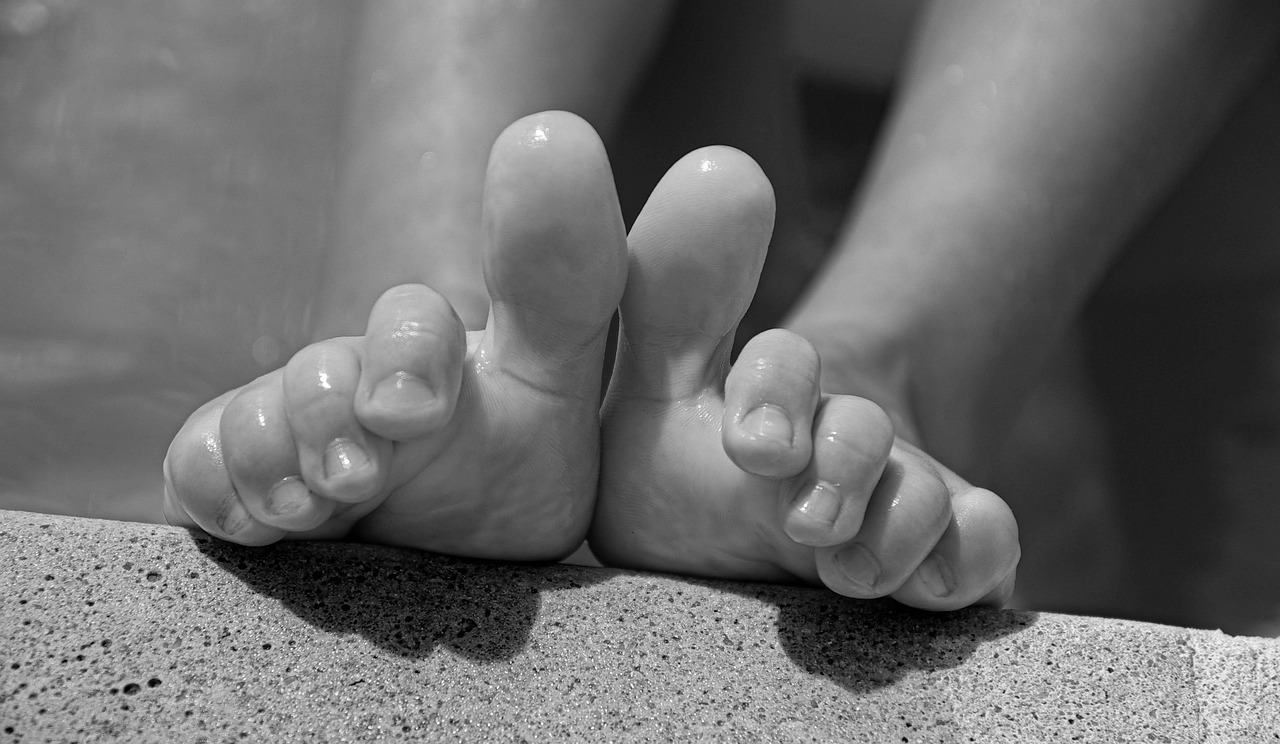
It may seem a stretch to claim that the foot and it’s toes have any direct relationship to the head, neck and jaw.  Structurally speaking, that’s true, but in this class, you will experience the direct relationship of these distant parts of yourself through functional movement explorations.  Each class will focus on a different functional trajectory: Mapping, and integrating these different functional relationships helps your brain to choose a better way.  That better way translates to reduced pain, improved balance and greater agility in uprightness. Improvements in jaw and facial pain conditions are also possible.

This is neuroplasticity work, where ‘exploration’ is more valuable than exercise.  If we want true, lasting change from chronic pain, we must speak the language of the brain.   Our brains respond and learn best when novelty, exploration, and variation are part of the movement experience.

If you have chronic pain or have pain or balance challenges in standing, or walking and jogging, then this is the class that will relieve, and improve that situation. And if you suffer with jaw or facial pain, linking the improved functions of the foot, ankle and toes further upstream often serves to relieve chronic pain in all these areas.

Pre-Registration for all 8 classes is required by December 30, 2026.  No drop-ins, no refunds. All payment formats must pre-register
Personal checks accepted.  Write check to Patricia Holman.  Mailing address: 767 Roca Street, Ashland Oregon 97520

REGISTER BY SCANNING THE QR CODE HERE:

The Foot Bone’s Connected to the Jaw bone

By

The Foot Bone’s connected to the Jaw bone.  An 8 week, online class.

Monday  January 11th, 2027 – Monday, March 1, 2027

9:30am-10:45am

It may seem a stretch to claim that the foot and it’s toes have any direct relationship to the head, neck and jaw.  Structurally speaking, that’s true, but in this class, you will experience the direct relationship of these distant parts of yourself through functional movement explorations.  Each class will focus on a different functional trajectory: Mapping, and integrating these different functional relationships helps your brain to choose a better way.  That better way translates to reduced pain, improved balance and greater agility in uprightness. Improvements in jaw and facial pain conditions are also possible.

This is neuroplasticity work, where ‘exploration’ is more valuable than exercise.  If we want true, lasting change from chronic pain, we must speak the language of the brain.   Our brains respond and learn best when novelty, exploration, and variation are part of the movement experience.

If you have chronic pain or have pain or balance challenges in standing, or walking and jogging, then this is the class that will relieve, and improve that situation. And if you suffer with jaw or facial pain, linking the improved functions of the foot, ankle and toes further upstream often serves to relieve chronic pain in all these areas.

Pre-Registration for all 8 classes is required by December 30, 2026.  No drop-ins, no refunds. All payment formats must pre-register
Personal checks accepted.  Write check to Patricia Holman.  Mailing address: 767 Roca Street, Ashland Oregon 97520

REGISTER BY SCANNING THE QR CODE HERE:

Subtlety is Powerful for Learning

By Videos

Subtle movements are key to accessing the ‘learning switch’ for both children AND adults.  The learning switch is that ‘AHA’ moment, that sudden realization, often accompanied by laughter, and for some of us, it’s that ‘witching hour’ when integrative function of the nervous system is at it’s highest.  Feldenkrais and Anat Baniel lessons are singular of all systems and approaches in developing this unique human attribute.  Your skill at accessing this ‘on switch’ is a significant health indicator.

Now do any damn thing you want

Now, Do Any Damn Thing You Want

By Awareness Through Movement Lessons, Feldenkrais Method, Healthy Adults, Moshe Feldenkrais

You’ve heard this phrase a hundred times before no doubt, and you understand what’s implied here. Anything goes.  It’s all good.  You’re free to choose anything. Be as crazy, or as sane or spontaneous as you want. Try anything. Trust your will to a goal.  There’s no wrong way, there are no mistakes.  One hears this famous Feldenkrais quote not infrequently, and usually in the environment of a movement lesson exploration.  I always chuckle when I hear it.

But what does Moshe really mean when he makes this request?

The effort involved in “doing any damn thing you want” is predictably excessive, habitual and ill-fitted to the stimulus that set it off.  Like a deep groove or well-travelled trail, there is no requirement for exploration or novelty or authentic and organic freedom of thought or action. Doing any damn thing you want produces ironically the opposite, a deeply grooved pattern of action, unoriginal and deeply conditioned. 

My professional life is devoted to helping others find greater comfort, vitality and reduced anxiety through the methodology of the somatic philosopher & martial artist, Moshe Feldenkrais.  One of the myriad ways I practice and embody the philosophy he developed is to study videotaped trainings he taught in the United States during the mid 1970’s to early 1980’s. 

Dr. Feldenkrais gives us 3 key inherent principles basic to any movement.  These are neuromuscular organization, timing and orientation.  When we attend to movement and offer novelty and variation within a structured movement exploration, then new learning occurs. 

Say, for example sitting in your chair as you read this, that you want to be more comfortable.  Do anything to accomplish greater comfort.

Go ahead! Be curious, what did you do to make yourself more comfortable?  Can you express it nonverbally or out loud doesn’t matter, how you make yourself more comfortable?  Listen to yourself…, that’s right. Give your self some time to experience how you did the thing to make yourself more comfortable.

Okay, now let that go for a moment.

Okay, now, let’s move with intention and awareness:

Return to your chair sitting away from the chair back, move back and return from the middle to the right side sitz bone.  Right, and return middle to right and back to middle.  Many times. Make it easy, make it comfortable. Keep going.  What is your head doing?  Where does it go?  Can you express what is happening in the movement of your head when you rock to the right sitz bone? How does your spine move when you rock to the right side?  How does it bend, flex, or arch?  What is happening there? Can you express in words or images what you sense and observe?

Now go to the left sitz bone, rock leftwards and return to middle, slowly, many times.  Make it easy, make it comfortable. Keep going.  What is your head doing?  Where does it go?  Can you express what is happening in the movement of your head when you rock to the left side sitz bone? How does your spine move when you rock to the left side?  How does it bend, flex, or arch?  What is happening there? Can you express in words or images what you sense and observe?

Let’s go in another direction.  Move and shift your weight to your pubic bone, so arrange yourself so that from where you’re sitting on yourselves, you shift your weight to your pubic bone.  Many times. Make it easy, make it comfortable. Keep going.  What is your head doing?  Where does it go?  Can you express what is happening in the movement of your head when you rock to your pubic bone? How does your spine move when you rock forwards like this?  How does it bend, flex, or arch?  What is happening there? Can you express in words or images what you sense and observe?

And now shift weight to your tailbone, many times.

Make it easy, make it comfortable. Keep going.  What is your head doing?  Where does it go?  Can you express what is happening in the movement of your head when you rock to your tailbone? How does your spine move when you rock here?  How does it bend, flex, or arch?  What is happening there? Can you express in words or images what you sense and observe?

Okay, that’s it. rest yourself.  Close your eyes if you want, and rest, breathe.    

For one last time, go ahead! Sense how you make yourself more comfortable in sitting. 

Go ahead, do any damn thing you want!

Can you more deeply sense and observe how the freedom to move is actually more informed and with a deeper integrity now that you’ve paid attention to yourself in this way? How do you sense this freedom in yourself?  What has changed? 

And this was Moshe’s exemplary & loving guidance

Disengaging from habitual patterns is necessary for learning.  When you know what you’re doing, and have a clearer knowledge of self and ability, you reduce the effort of the will & release habitual thought & action.  

Then,  you can do any damn thing you want!